
Este artículo está en inglés. Use el selector EN | ES para navegar el resto del sitio en español.
SchedulingWhat to Look for in ABA Scheduling Software
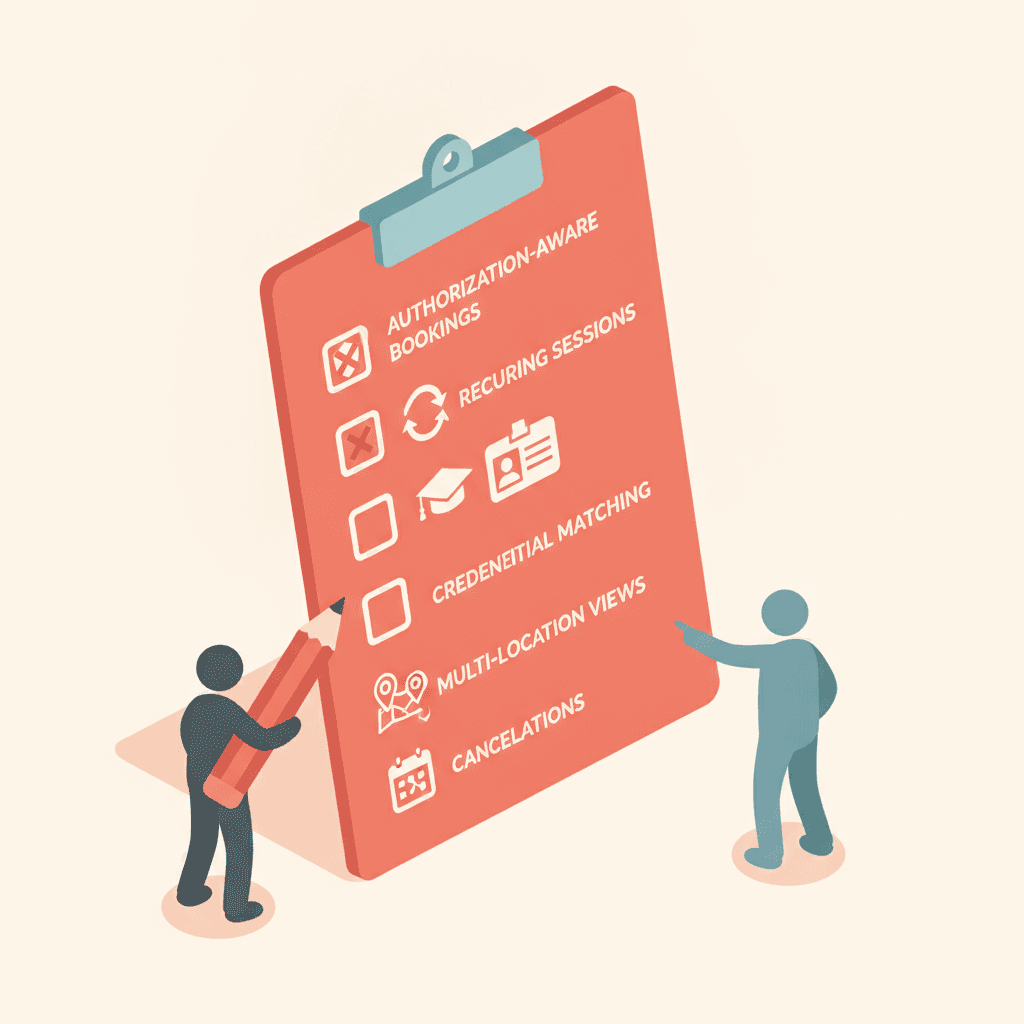
An evaluation checklist for ABA scheduling software: authorization-aware bookings, recurring sessions, credential matching, multi-location views, cancellations.
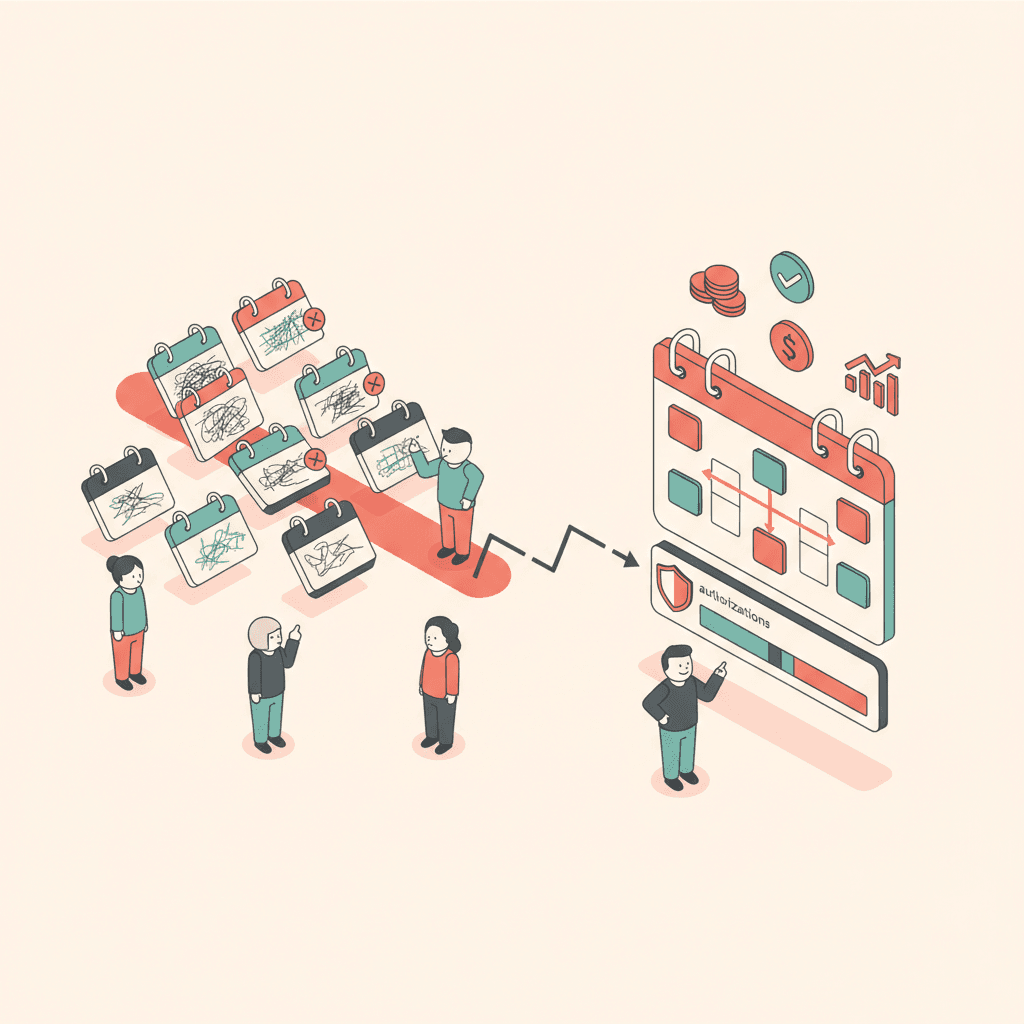
Most ABA centers start scheduling in whatever calendar the office already uses. It works until it does not: a technician is double-booked across two locations, a client runs out of authorized units three weeks early, or a session is delivered by someone whose RBT certification lapsed last month. None of these are calendar problems. They are data problems that a calendar cannot see.
This guide is an evaluation checklist for ABA scheduling software. It applies whether you are comparing standalone tools or a broader operations platform. These are the requirements we built TargetFlo scheduling against.
What is ABA scheduling software?
ABA scheduling software is a system for planning, delivering, and reconciling therapy sessions that understands the constraints specific to applied behavior analysis: authorized units per CPT code, recurring multi-hour bookings, technician credentials and supervision ratios, family availability, and multiple physical locations. Unlike a generic appointment tool, it treats each session as a consumer of a finite authorization and as the source record for clinical documentation and billing.
The evaluation checklist
| Capability | Why it matters | Question to ask |
|---|---|---|
| Authorization-aware bookings | Prevents unbillable sessions | Does the booking show remaining units? |
| Recurring bookings | ABA is weekly, not one-off | Can I create a 26-week series and edit one occurrence? |
| Staff credential matching | Payer and compliance rules | Will it block an uncredentialed technician? |
| Multi-location calendars | Staff and clients move between sites | Can I see one technician across all locations? |
| Cancellation handling | Units, make-ups, and attrition | Are cancellation reasons structured? |
| Supervision overlap | 97155 runs alongside 97153 | Can two staff be booked on one session? |
| Session instance record | Basis for notes and claims | Does each occurrence store actual start and end? |
1. Authorization-aware bookings
This is the requirement that separates ABA scheduling from everything else. Every booking should be tied to a specific authorization and CPT code, and the scheduler should see — before saving — how many units the series will consume and how many remain.
The failure mode without it is quiet. A client authorized for 480 units of 97153 is booked for 24 units a week. Nobody notices until week 20, when the payer denies everything after the ceiling. Authorization-aware software projects consumption forward and flags the shortfall on day one. TargetFlo's Insurance and Eligibility module captures the authorization stages during intake so that scheduling, when it ships, will have that ceiling available. Our post on Why Scheduling Must Connect to Authorizations in ABA covers the mechanics.
2. Recurring bookings with exception handling
ABA is delivered in standing weekly patterns — often 10 to 30 hours per week across several days. Scheduling software must create a recurring series in one action and then let you change a single occurrence (a holiday, a substitute technician, a shortened day) without breaking the rest of the series.
Ask to see how the tool handles a technician going on leave for two weeks. If the answer involves deleting and recreating 40 sessions, keep looking.
3. Staff credential and role matching
Payers care who rendered the service. A 97153 session generally requires a credentialed technician; a 97155 session requires a BCBA or equivalent. Good scheduling software knows each staff member's credential, expiration date, and role and refuses (or at least warns) when a booking violates the rule.
Credential data usually lives in the HR or training system, so integration matters. TargetFlo's Workforce directory and Training and Compliance module store roles, certificates, and course completions today; TargetFlo scheduling reads from them rather than duplicating them.
4. Multi-location visibility
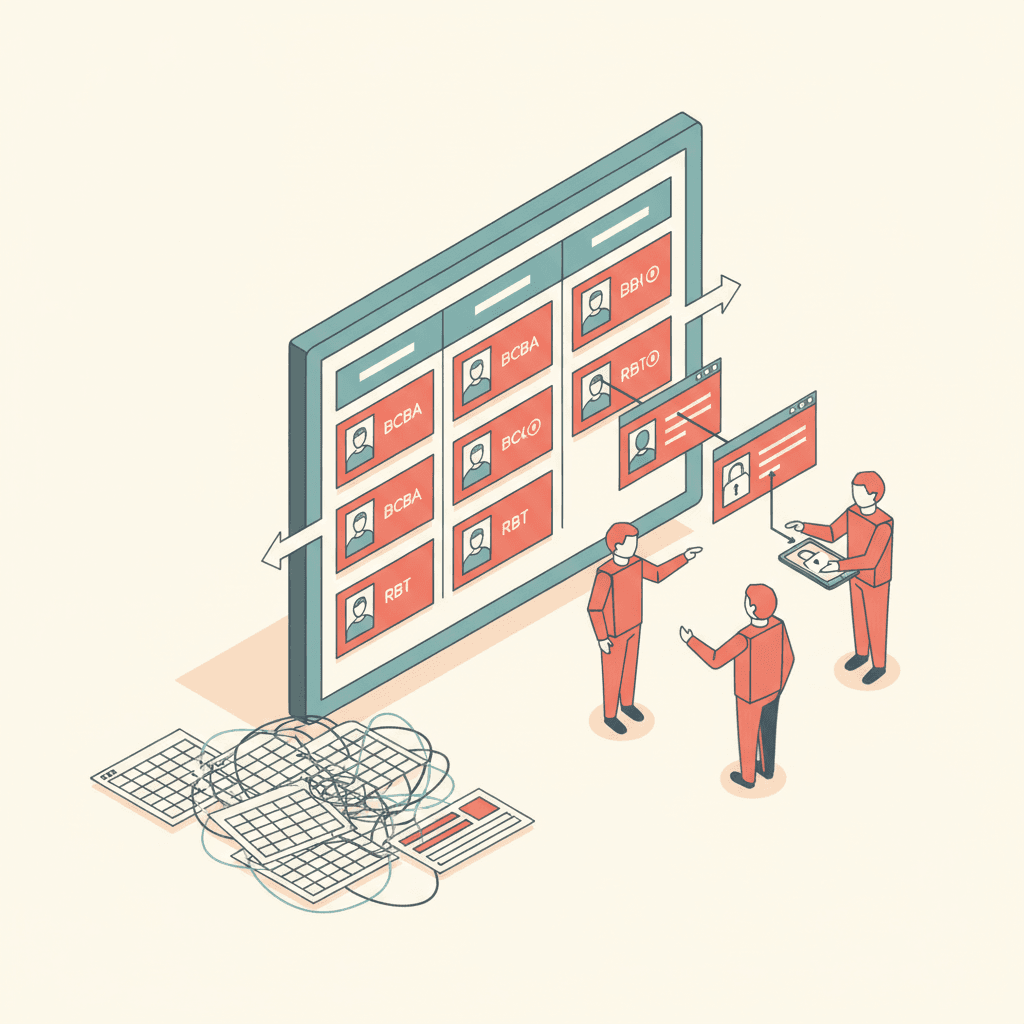
A technician who works mornings at one clinic and afternoons at another needs a single calendar. A family who alternates between in-clinic and in-home sessions needs a single client timeline. Scheduling that is siloed per location creates double-bookings and travel conflicts that no amount of coordination calls will fix.
Look for a location dimension on every booking and views that filter by location, by staff, and by client — not one or the other. For a broader take on the problem, see Managing Multi-Location ABA Centers Without Spreadsheet Chaos.
5. Structured cancellations
Cancellations are inevitable; unstructured cancellations are a choice. Each cancelled session should record who cancelled (family, staff, center), why, how much notice was given, and whether a make-up is planned. Those fields drive three important things:
- Unit reconciliation — cancelled units return to the authorization balance
- Dosage monitoring — a client falling below recommended hours needs clinical attention
- Attrition prediction — rising family cancellations are the earliest sign of disengagement
Any tool that treats cancellation as a delete button is discarding your most predictive operational data.
6. Supervision and overlapping sessions
97155 protocol modification is typically rendered while a 97153 session is in progress, with the BCBA observing and directing. The scheduler must allow two staff members with two different codes on one time block for one client, and the resulting session instances must be distinct for billing.
Many general-purpose tools model one provider per appointment. That single assumption makes them unusable for ABA supervision.
7. Session instances as a system of record
Every occurrence should become a session instance with actual start and end times, rendering provider, status, and units delivered. This record is what session notes attach to and what claims are built from. If the schedule is only a picture of the plan and not a record of reality, documentation and billing will drift from it. The full chain is described in Authorization to Claim: The ABA Revenue Cycle Explained.
Nice-to-have features that are not the core
Drag-and-drop calendars, color coding, and mobile apps are pleasant. Automated family reminders are useful. But none of them matter if the tool cannot answer "how many units does this client have left?" Evaluate the seven core capabilities first and treat polish as a tiebreaker.
Where TargetFlo stands
TargetFlo scheduling is live and described on our Scheduling page. It runs on the same data model as the intake pipeline, client records, and eligibility checks. The authorization a family receives at the end of intake is the ceiling scheduling enforces, and each scheduled session feeds data collection, the signed note, and the claim.
If you are evaluating scheduling tools now, use the checklist above. If you are consolidating onto one operations platform, make sure intake, authorizations, scheduling, and billing share one record — that is what keeps units and claims consistent.
- ABA scheduling software
- ABA authorization tracking
- multi-location ABA management
- ABA therapy center software
Véalo en TargetFlo
Saquemos la admisión del fax
Reserve una demo de 30 minutos: mapeamos su flujo de referidos al pipeline de 9 etapas, conectamos su fax y mostramos elegibilidad en admisión.
Reservar demoFAQ