
Este artículo está en inglés. Use el selector EN | ES para navegar el resto del sitio en español.
ClinicalBehavior Intervention Plan (BIP) Software Inside Your POC Workflow
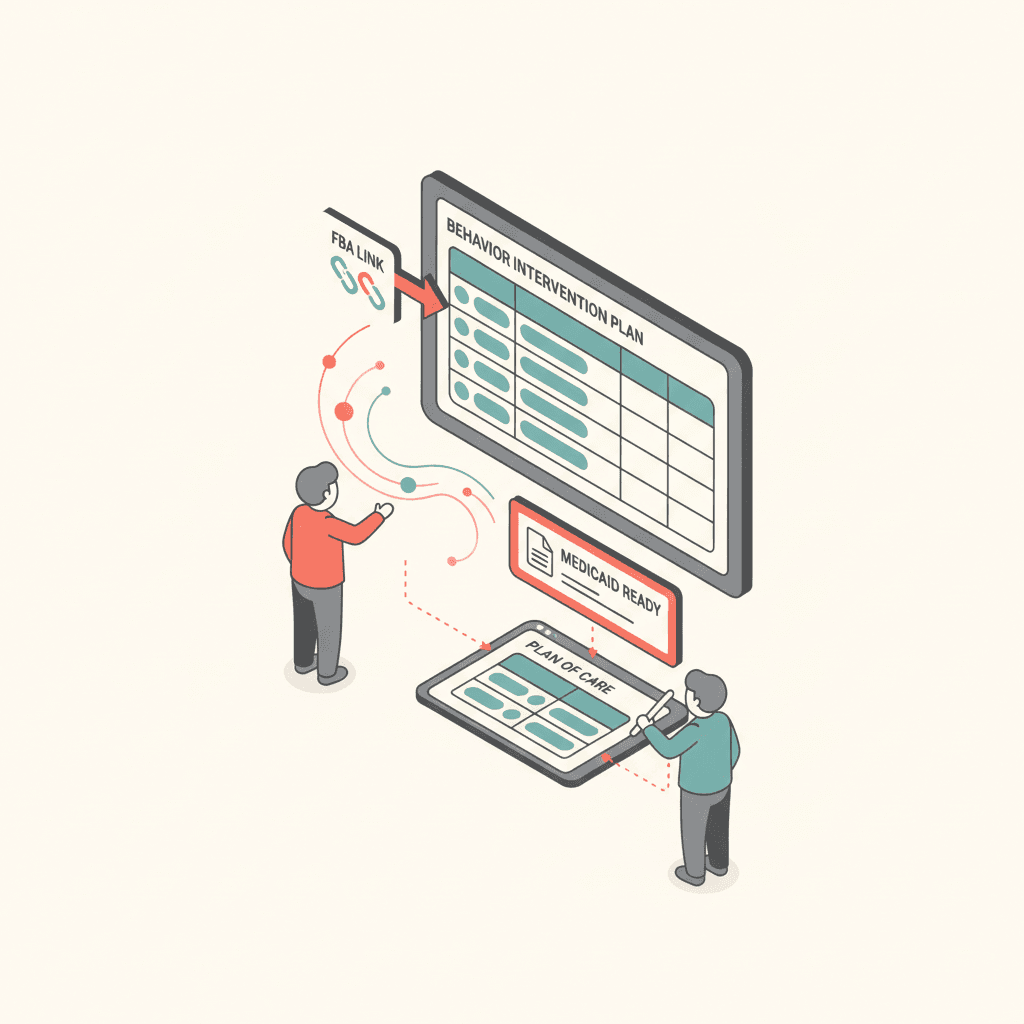
Behavior intervention plan software inside your Plan of Care workflow: structured BIP tables, FBA links, and Medicaid-ready sections without duplicate entry.
Behavior Intervention Plan (BIP) Software Inside Your POC Workflow
Behavior intervention plan software earns its keep when BIP tables live inside the same Plan of Care record as goals, hours, and caregiver training—not when it becomes another folder of orphaned PDFs on a shared drive. Autism service organizations lose time when FBAs live in one system, BIPs in another, and the Medicaid POC in a third.
Integrating BIP authoring into your POC workflow keeps function-based strategies visible to intake coordinators preparing authorization packets and to clinical supervisors reviewing reauthorizations.
Why orphan BIPs create authorization friction
Reviewers read the POC holistically. If problem behavior targets appear in session notes but not in the plan, or if the BIP lists interventions that nowhere connect to billed service categories, internal QA flags mount and external denials or delays follow. Completeness is not guaranteed approval—but inconsistency is a predictable delay.
Structured BIP tables inside the POC encourage authors to align:
- Operational definitions with data collection plans on goals
- Replacement behaviors with skill acquisition targets
- Antecedent and consequence strategies with caregiver training sections
Start from the FBA, not a blank table
A BIP without a documented functional assessment is a template exercise. Your workflow should require a completed or in-progress FBA record before BIP rows unlock, or at minimum a link to the assessment narrative that states hypothesized functions.
When child assessment modules capture skill deficits and indirect assessment results, BIP software can pre-fill context fields so BCBAs edit rather than retype. TargetFlo keeps assessment, FBA, BIP, and POC stages on one intake card so ownership is clear when a payer requests edits.
Table design that reviewers and staff both read
| Column group | Purpose |
|---|---|
| Behavior | Definition, measurement, baseline |
| Function | Summary from FBA, not guesswork |
| Prevention | Antecedent modifications |
| Teaching | Replacement skills and prompts |
| Response | Consequence strategies aligned with ethics codes |
| Safety | Crisis steps when intensity or aggression present |
| Data | Who collects, how often, where logged |
Long prose belongs in narrative sections; the table is the at-a-glance map for RBTs and for auditors checking whether strategies match goals.
Medicaid POC alignment
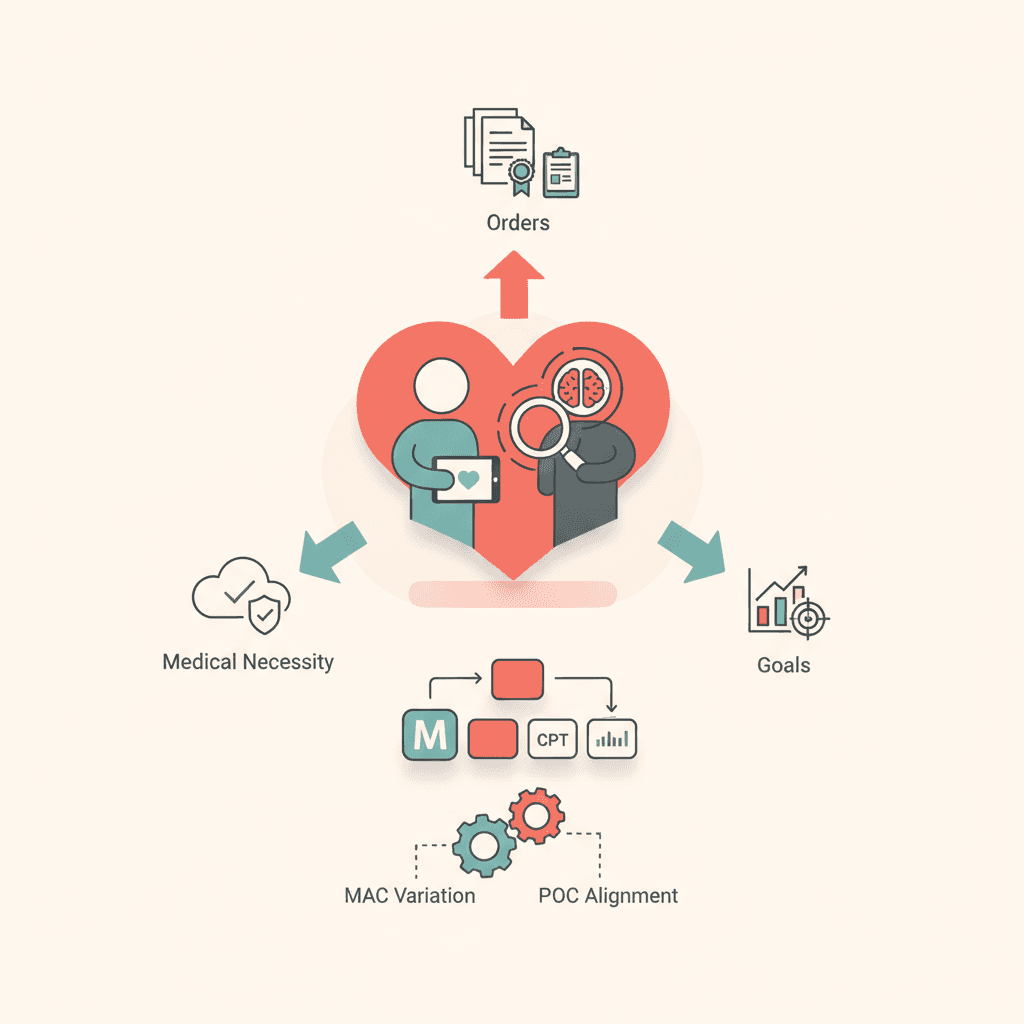
State Medicaid programs, including templates aligned with Medicaid POC standards, often expect behavior reduction and skill acquisition to appear in specific sections. Software should mirror those headings so export packets match reviewer habits in your state—not every state uses identical labels, so maintain configurable templates per program.
North Carolina centers may layer CCP 8F diagnostic attachments separately; behavior plans still must match the functional needs described in eligibility sections. Cross-link BIP targets to the assessment summaries payers already saw in diagnostics.
Signatures, versions, and parent visibility
Some BIPs include sensitive safety plans; parent portals may show summarized caregiver strategies while keeping full crisis protocols staff-facing only. Policy varies by center and payer—configure visibility deliberately rather than defaulting to “share everything.”
When the POC revision triggers reauthorization, version BIPs with the same revision number as the POC so historical plans remain discoverable.
QA checklist before authorization
- Every target behavior in the FBA appears in the BIP or is explicitly retired with rationale
- Replacement skills appear as measurable goals where appropriate
- Caregiver training sections reference strategies parents can implement
- Hours requested support both skill acquisition and behavior support as documented
- BCBA signature and date present on the integrated document
Run the checklist in software so coordinators see green/red status before submitting to billing.
RBT-facing clarity without exposing entire POC PDFs
Registered behavior technicians need actionable BIP rows during sessions—not a fifty-page POC. Consider staff views that show operational definitions, prompt hierarchies, and data sheets while hiding insurance narrative. Parent portal views may emphasize caregiver strategies without listing internal staff-only crisis phone trees if your policy separates those audiences.
When BIP software syncs target status back to goal mastery tables, supervisors spend less time reconciling session notes with plan documents during reauthorization.
Reauthorization: show what changed in behavior support
Payers reviewing continued services want evidence that interventions responded to data. Version BIPs alongside goal progress summaries. Highlight discontinued targets, new functions hypothesized after reassessment, and strategies that failed with documented rationale—honest clinical history beats silent deletion of old rows.
Link updated BIPs to child assessment reassessment dates so reviewers see why strategies shifted.
Selecting software: integration beats standalone BIP apps
Standalone BIP tools often lack intake stage awareness. Prefer platforms where BIP completion blocks or warns on POC stage advancement, FBA documents attach with one click, and export bundles include behavior plans in payer-preferred order. Ask vendors whether BIP edits trigger new parent signature requirements automatically.
Common documentation mistakes to catch early
| Mistake | Why it delays auth |
|---|---|
| Generic strategies not tied to function | Looks templated |
| Missing crisis plan for high-risk behavior | Medical necessity questioned |
| BIP targets absent from goals | Internal inconsistency |
| Stale FBA date on revised BIP | Suggests outdated assessment |
Clinical directors can run monthly peer review on a sample of integrated POC and BIP exports—not to guarantee approval, but to catch patterns before billing submits ten similar packets with the same gap.
Book a Demo
Explore how TargetFlo embeds BIP tables in Plan of Care workflows tied to assessment and intake stages. Book a Demo.
Disclaimer
Educational content only; not legal or billing advice. Template structure does not ensure payer approval; confirm requirements with your state program and billing advisors.
- behavior intervention plan
- BIP
- FBA
- Plan of Care
- ABA software
Véalo en TargetFlo
Saquemos la admisión del fax
Reserve una demo de 30 minutos: mapeamos su flujo de referidos al pipeline de 9 etapas, conectamos su fax y mostramos elegibilidad en admisión.
Reservar demoFAQ