

Este artículo está en inglés. Use el selector EN | ES para navegar el resto del sitio en español.
ClinicalPartial Interval vs Whole Interval vs Momentary Time Sampling: 3 Methods Compared
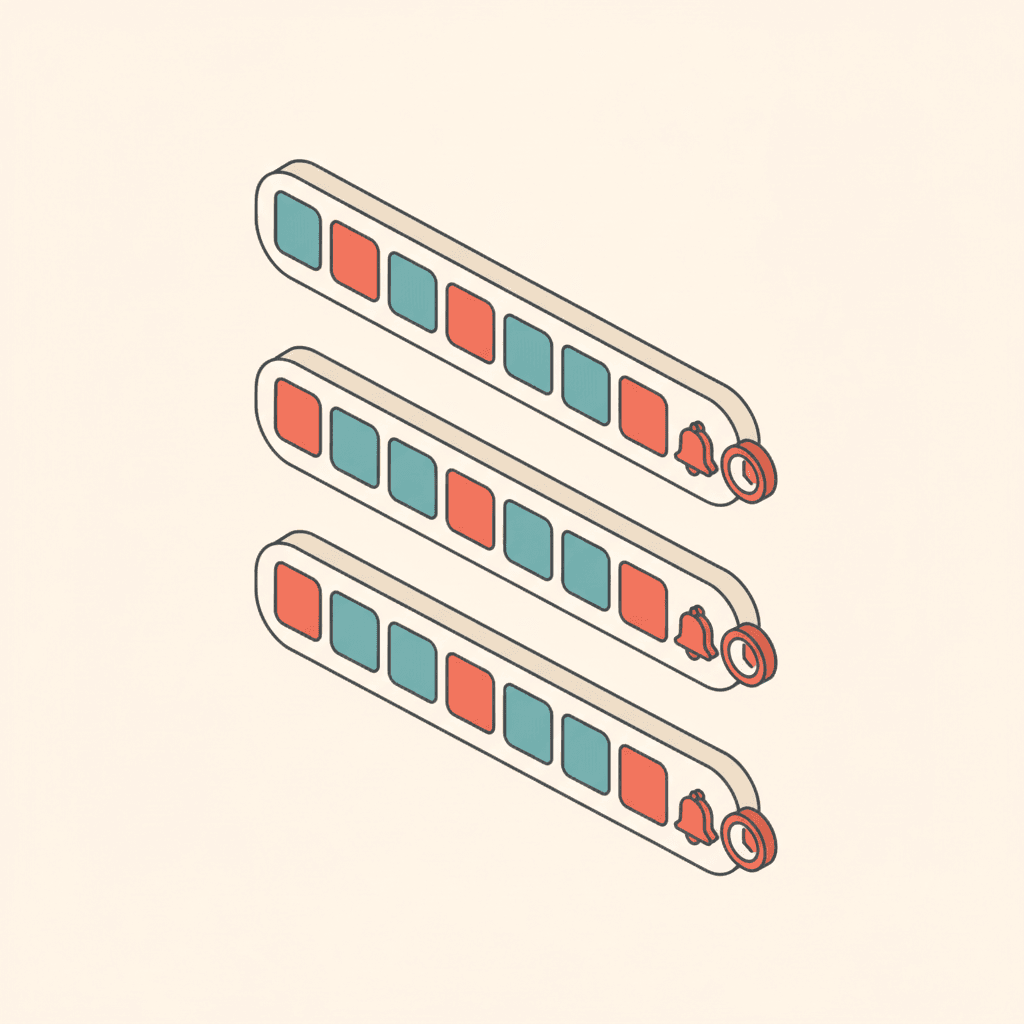
How partial interval recording, whole interval recording and momentary time sampling work, which one overestimates or underestimates behavior, and how to pick the right interval length.
Partial interval overestimates behavior, whole interval underestimates it, and momentary time sampling gives an unbiased estimate that needs less attention. The right choice depends on the behavior and on how closely you can watch.
1. Partial interval recording
Score the interval if the behavior occurs at any point in it. Because brief behaviors still count, partial interval usually overestimates how much of the session is covered. Use it for behaviors you want to reduce, especially high-rate or hard-to-time ones such as vocal outbursts or hand flapping.
2. Whole interval recording
Score the interval only if the behavior occurs for the entire interval. It usually underestimates. Use it for behaviors you want to increase in length, such as staying seated or attending to the task.
3. Momentary time sampling (MTS)
Look only at the end of each interval and score whether the behavior is happening at that moment. It frees the observer between checks, which suits group settings or a busy teacher or RBT. Keep intervals short enough that behavior is not missed.
Side-by-side
| Partial | Whole | Momentary | |
|---|---|---|---|
| Scores an interval when | Behavior occurs at any time | Behavior fills the whole interval | Behavior is happening at the interval end |
| Tends to | Overestimate | Underestimate | Roughly unbiased |
| Observer attention | Continuous | Continuous | Only at the check |
| Good for | Reducing a behavior | Increasing duration | Many clients or long sessions |
4. Choosing an interval length
Shorter intervals give a truer picture but demand more effort. A common starting point is 10–30 seconds for high-rate behaviors and up to a few minutes for MTS in group settings. Document the interval length so every RBT uses the same one.
5. Report percent of intervals
Convert to the percent of intervals scored. Keep the method fixed within a phase; switching between partial and whole mid-phase breaks comparisons.
How TargetFlo records intervals
Interval targets can be set to partial, whole or momentary. The clock comes from timestamps and beeps and vibrates at each boundary; the RBT answers Yes or No per interval, and a whole interval left unanswered at its boundary is marked skipped. The graph shows percent of intervals. See Data Collection and the measurement cheat sheet.
- partial interval recording
- whole interval recording
- momentary time sampling
- ABA interval recording
- ABA data collection methods
Véalo en TargetFlo
Saquemos la admisión del fax
Reserve una demo de 30 minutos: mapeamos su flujo de referidos al pipeline de 9 etapas, conectamos su fax y mostramos elegibilidad en admisión.
Reservar demoFAQ