
ABA Measurement Procedures Cheat Sheet: 8 Ways to Measure Behavior
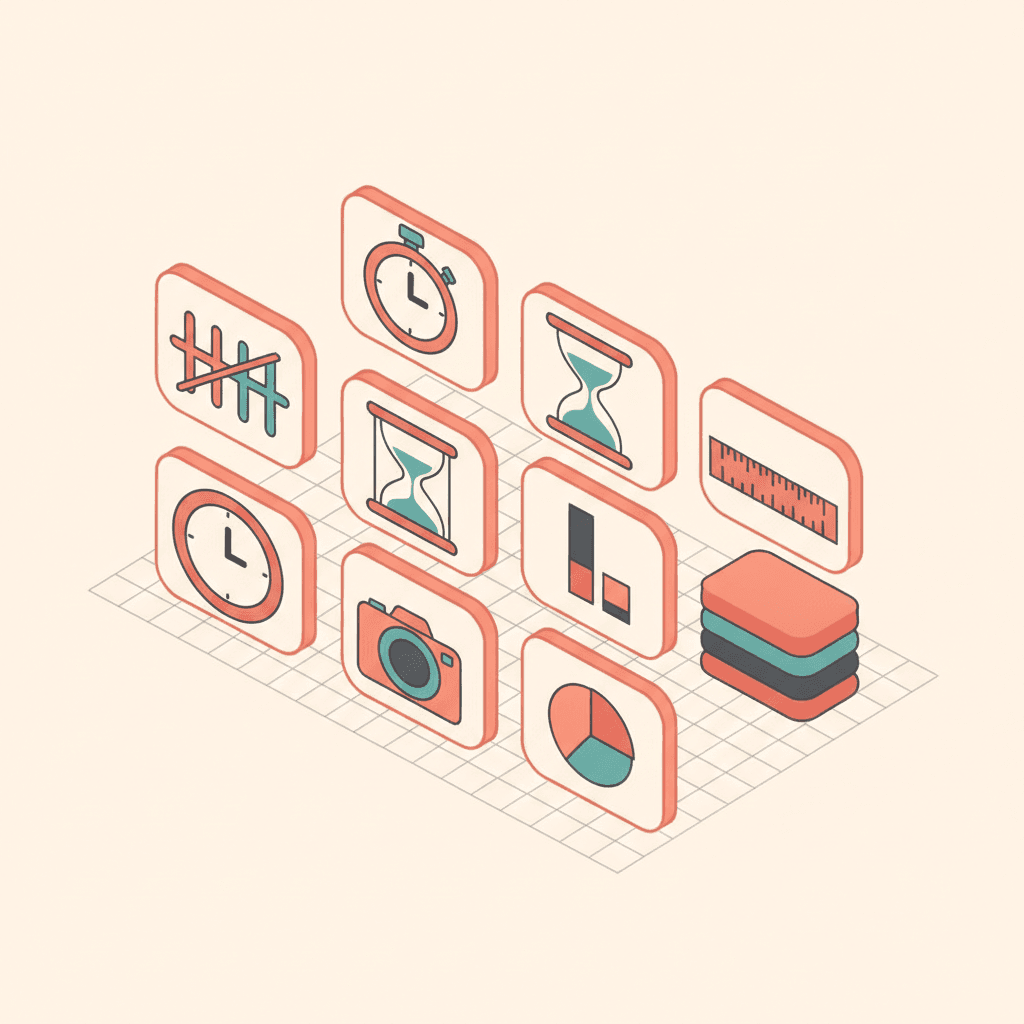
A quick reference for the eight core ABA measurement procedures — frequency, rate, duration, latency, inter-response time, interval recording, permanent product and percent of trials — with when to use each.
Choose the measurement procedure that matches the dimension of the behavior you want to change, then use it the same way every session. Here are the eight core procedures with the question each answers.
1. Frequency (count)
Count each occurrence. Best for discrete, brief behaviors such as hitting or requests. Use it when sessions are about the same length; otherwise convert to rate. In an app this is a +1 button with undo.
2. Rate
Count divided by time (responses per minute or per hour). It lets you compare sessions of different lengths. TargetFlo shows rate per hour for frequency targets.
3. Duration
How long a behavior lasts, measured in bouts from start to stop. Best for tantrums, on-task time or engagement. Report total seconds, average bout, or percent of session.
4. Latency
Time from an instruction or cue to the start of the response. Best when the issue is speed of compliance. Report mean latency; lower is usually better.
5. Inter-response time (IRT)
Time between two consecutive responses. Useful for pacing behaviors such as bites per minute or for DRL schedules.
6. Interval recording
Divide the observation into equal intervals and mark whether the behavior occurred. Three versions exist — see partial vs whole interval vs momentary time sampling.
7. Permanent product
Measure the outcome the behavior leaves behind instead of watching it: worksheets completed, items put away, assembled blocks. Convenient when direct observation is not possible.
8. Percent of opportunities (trials)
For skill acquisition, score each learning opportunity and report percent independent or percent correct. Read discrete trial data collection tips and prompt hierarchy explained.
Quick match table
| Question | Use |
|---|---|
| How often does it happen? | Frequency or rate |
| How long does it last? | Duration |
| How fast does it start? | Latency |
| What does it look like across a long window? | Interval recording |
| Is there a product I can check later? | Permanent product |
| Is the child learning a skill? | Percent independent over trials |
| Why is it happening? | ABC data |
In TargetFlo
Data collection supports frequency, duration, latency, interval, task-analysis and trial recording, plus ABC entries, and each target's measure drives its graph and mastery rule. See the clinical data collection hub for the full series.
- ABA data collection methods
- ABA measurement procedures
- frequency duration latency ABA
- types of ABA data collection
- behavior measurement
See it in TargetFlo
Run a session in the demo
Book a 30-minute demo. We start a session from the schedule, collect trials, timers and ABC on a tablet, graph the target against its mastery line, and sign the note that makes the session billable.
Book a DemoFAQ