
AI integrations
Live todayAI that reads faxes, drafts clinical forms, and writes quiz questions — inside HIPAA aware ABA software
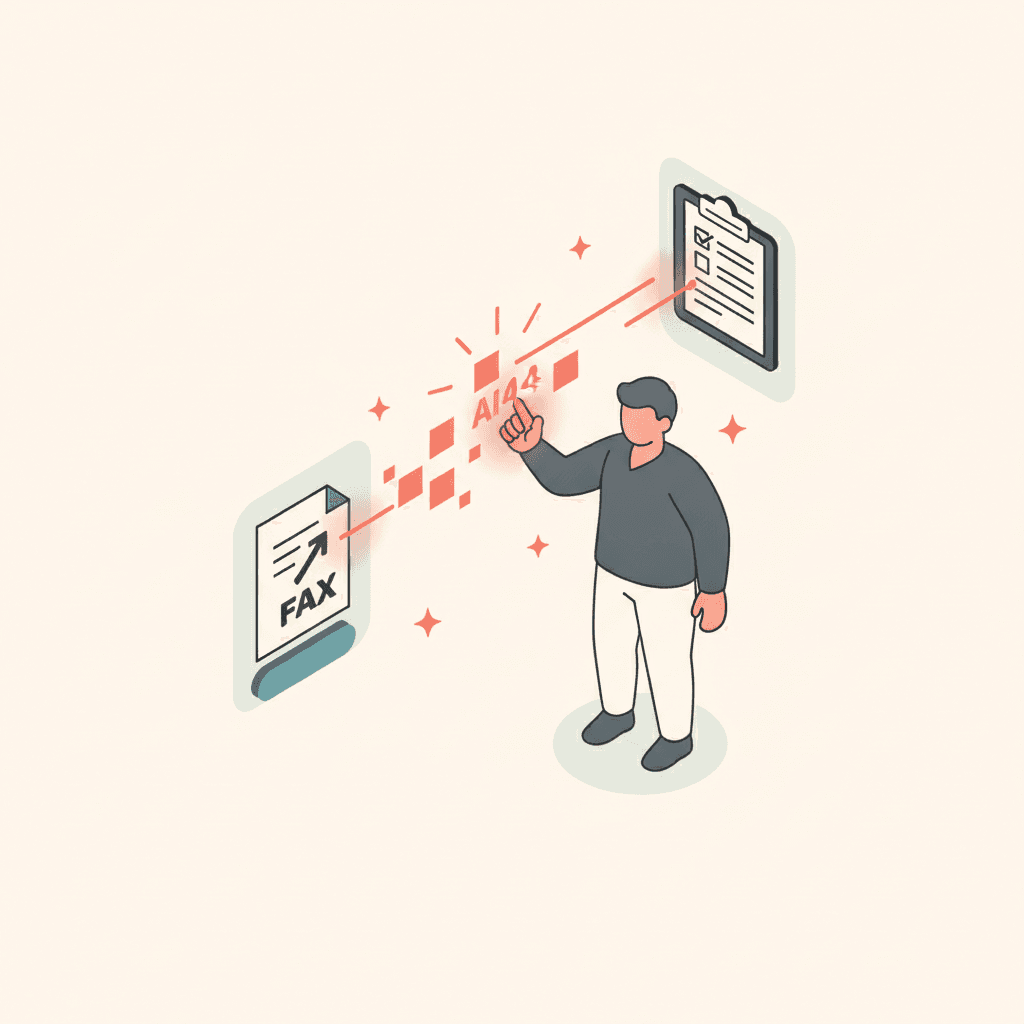
Google Gemini powers OCR, clinical compose, broadcast assist, and MCQ generation. Claude and ChatGPT connect for operational questions. Clinicians review every clinical suggestion. PHI stays in a controlled environment.
What are TargetFlo AI integrations?
TargetFlo AI integrations are narrowly scoped uses of Google Gemini inside HIPAA aware ABA software: OCR on inbound faxes in the Fax Inbox, clinical form compose on ADOS-2 reports, child assessments, and Plans of Care, compose assist for SMS and email broadcasts, and multiple-choice question generation in the course builder. Claude and ChatGPT connectors answer operational questions from non-PHI aggregates. Every feature has a documented input, a human confirmation step, and an audit record. See Google Cloud security.
Five AI features
All five live today
Each feature does one job with one kind of input. Clinical compose is assistive — licensed clinicians review, edit, and sign.
Gemini OCR on faxes
Every inbound fax page is read and text-extracted, with suggested client, guardian, payer, and referring-provider fields for a coordinator to confirm.
Clinical form compose
On ADOS-2 reports, child assessments, and Plans of Care: fill empty fields, refine a section, or draft from record context. Clinicians accept, edit, or discard every suggestion.
Broadcast compose assist
Draft SMS and email broadcasts faster. The assistant proposes wording from your prompt; the PHI guard still checks every outbound text.
MCQ generation for courses
Turn a chapter's video transcript or PDF into multiple-choice questions for the course builder. Trainers edit and approve before publishing.
Claude & ChatGPT connectors
Connect in one click and ask operational questions — staff, credentials, scheduling, authorizations, sessions, tasks — against non-PHI aggregates only.
Gemini OCR
Live todayFrom a scanned referral to pre-filled intake fields
Referral faxes arrive as images. Gemini OCR reads each page, extracts the text so the document is searchable, and proposes the fields an intake coordinator would otherwise type: client name, DOB, guardian, referring provider, payer, and diagnosis codes.
- Multi-page documents handled as one referral
- Suggested fields are highlighted and confirmed by a coordinator — never auto-written
- Extracted data stored in the isolated PHI schema alongside the document
- Linked to a client or a New Intake card in one action
Pediatric Partners
Carolina Dev. Clinic
Unknown · 919-555-0142
AI extraction
Gemini OCR · 98% confidence- Referral type
- ABA assessment
- Referring provider
- Dr. ██████, MD
- Client
- ██████ ██████
- DOB
- ██/██/20██
- Payer
- BCBS NC
- Diagnosis
- F84.0
Clinical form compose
Live todayAI accelerates documentation. Clinicians review, edit, and sign.
On ADOS-2 reports, child assessments, and Plans of Care, Gemini proposes text from the form schema and the context already on the record. Three modes — fill empty, refine, draft section — never overwrite without a clinician accepting the suggestion.
- fill_empty suggests only blank fields; existing clinician text is never overwritten
- refine rewrites a selected section for clarity; shown as a proposal
- section drafts an entire narrative (for example behavioral observations) from record context
- Licensed clinicians review, edit, and sign every report — AI does not diagnose or replace clinical judgment
Client · A.R. · CA 4y 7m
ADOS-2 Module 2 · Consensus scoring
| Item | R1 | R2 | Consensus |
|---|---|---|---|
| A1 · Overall level of language | 1 | 1 | 1 |
| A2 · Speech abnormalities | 1 | 2 | 1 |
| B1 · Unusual eye contact | 2 | 2 | 2 |
| B4 · Shared enjoyment | 1 | 1 | 1 |
| D2 · Hand/finger mannerisms | 0 | 1 | 1 |
- Social Affect
- 12
- RRB
- 4
- Total
- 16
- Comparison
- 8
Behavioral observations: During free play, A.R. engaged with cause-and-effect toys and directed two spontaneous vocalizations toward the examiner. Eye contact was fleeting and not coordinated with…
Suggestion only — nothing is saved until the clinician accepts.
Compose assist & MCQ generation
Live todayFaster messages and faster training content, with a person in the loop
Two smaller uses of the same model. Compose assist helps front office staff draft a clear broadcast to families or staff. MCQ generation turns a training chapter into a draft quiz so trainers spend their time reviewing, not writing.
- Compose assist drafts from a plain-language prompt; the PHI guard checks SMS before send
- MCQ generation reads chapter transcripts or PDFs and drafts questions with answer keys
- Trainers approve, edit, or regenerate before a test is published
- Both features can be disabled per organization
1. Which CPT code covers direct ABA therapy delivered by an RBT?
ABCD2. When must a session note be completed relative to the session?
ABCD3. Who signs the Plan of Care before authorization is submitted?
ABCD
What each feature sees
Data scope, feature by feature
The right question about AI in healthcare software is not 'is it smart' but 'what does it see'. Here is the answer for each feature.
| Feature | Input it receives | What it produces | PHI involved? |
|---|---|---|---|
| Gemini OCR | The fax pages a coordinator is triaging | Extracted text and suggested fields, shown for human confirmation | Yes — fax content is PHI; processed inside the PHI boundary, stored in the PHI schema |
| Clinical form compose | The form schema plus client/assessment context already on the record | Suggested field or section text; nothing saves until a clinician accepts | Yes — clinical documentation is PHI; processed inside the PHI boundary, clinician-reviewed |
| Compose assist | The draft message and the prompt the sender types | Suggested wording; nothing is sent until a human clicks send | Only what the sender types; the PHI guard blocks identifiers in SMS |
| MCQ generation | Course chapter text, video transcript, or PDF | Draft questions and answer keys for trainer review | No — course material is training content, not client data |
| Claude & ChatGPT connectors | Server-computed aggregates: counts, rates, queue sizes | Answers to operational questions in Claude or ChatGPT | No — never client names, DOB, diagnosis, or insurance IDs |
Safety
AI access is scoped to operational aggregates. PHI never leaves your controlled environment.
Scoped by feature
Each AI feature is wired to one input: fax pages, a draft message, a chapter, or an aggregate query. There is no general-purpose model with access to the database.
Human confirms
OCR fields, compose suggestions, and generated questions are proposals. A person confirms before anything is written to a record or sent.
PHI stays in the PHI schema
Extracted fax data is written to the isolated PHI schema. Operational AI — including the Claude and ChatGPT connectors — reads only purpose-built, non-PHI views.
Logged like any other action
OCR runs, compose uses, and MCQ generations are recorded in the audit trail with actor and timestamp.
No training on your data
TargetFlo uses Gemini through enterprise API terms; your documents and messages are not used to train foundation models.
Aggregates only for assistants
The Claude and ChatGPT connectors answer with counts and rates computed server-side. They cannot look up an individual client.
Claude & ChatGPT connectors
Live todayAsk Claude or ChatGPT about your operation — never about a client
TargetFlo's Model Context Protocol connectors expose non-PHI operational data to Claude and ChatGPT: staff and credentials, training, schedule and authorization utilization, session metrics, referrals, and tasks. Aggregates are computed server-side; the model never receives an identifier.
- “Whose credentials expire in the next 60 days?”
- “Which authorizations are above 90% used?”
- “What percentage of RBTs completed the HIPAA refresher?”
- One-click connect, TargetFlo sign-in, role-based topics, full audit log
How booked is the schedule against authorized hours this week?
82% of authorized hours are scheduled. 3 authorizations are above 90% used.
Counts only. No names, DOB, diagnosis, or insurance IDs are available to the model.
FAQ
AI integration FAQs
Related features
See Gemini OCR read one of your real referral faxes
Book a demo and bring a redacted sample referral. We run OCR, show the suggested fields, and walk through exactly where the extracted data is stored.