
ABC Data Collection in ABA: 9 Examples and a Template You Can Copy
How to write ABC (antecedent-behavior-consequence) data: nine fictional examples, a simple template, common antecedent and consequence categories, and how to read patterns for function.
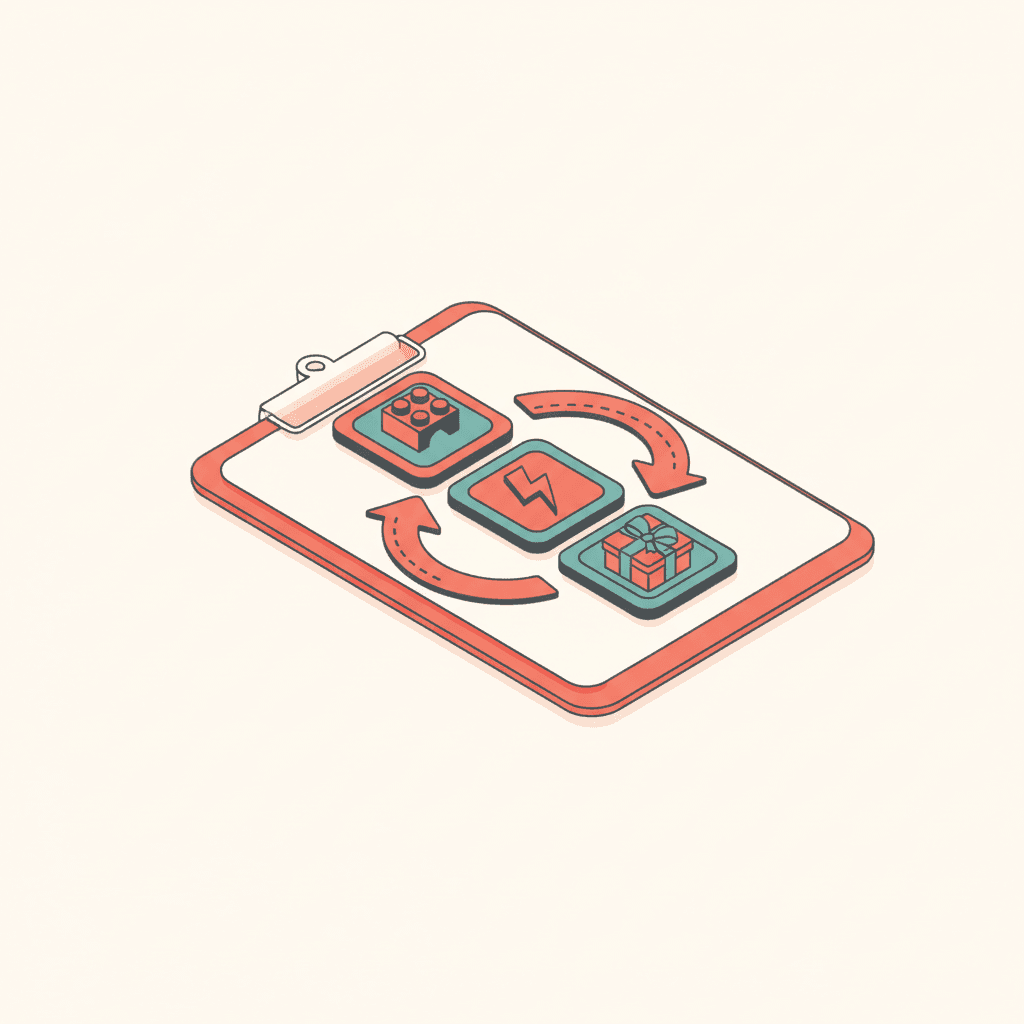
ABC data is a short, factual log of what happened before a behavior, what the behavior looked like, and what happened right after. Written well, it shows a pattern that points to the function of the behavior.
The template
| Field | What to write |
|---|---|
| Date / time / setting | When and where it occurred |
| Antecedent | The event immediately before (observable, not a guess) |
| Behavior | What the person did, in observable terms |
| Consequence | What happened immediately after |
| Intensity | Optional scale, for example 1–3 |
Describe what you saw, not why you think it happened. "Wanted attention" is an interpretation; "adult turned to another child" is an observation.
Nine fictional examples
- A: Math worksheet placed. B: Pushes paper off the desk. C: Task removed. Pattern: escape from demand.
- A: Favorite toy taken for transition. B: Drops to the floor and cries. C: Toy returned. Pattern: access to tangible.
- A: Adult on the phone. B: Calls out repeatedly. C: Adult responds. Pattern: attention.
- A: Alone in the room. B: Hand flapping. C: None. Pattern: automatic (sensory) — possible.
- A: Told "no snack yet." B: Screams. C: Snack given. Pattern: access.
- A: Move from play to table. B: Runs to the door. C: Blocked and redirected. Pattern: transition difficulty.
- A: Loud room, many children. B: Covers ears and leaves. C: Moved to a quiet space. Pattern: escape from sensory input.
- A: Peer takes block. B: Hits peer. C: Verbal reprimand. Pattern: needs more observations; reprimand may be attention.
- A: Unstructured free time. B: Throws items. C: Ignored. Pattern: possible automatic or attention; check other settings.
How to read patterns
Count how often each antecedent and consequence appears. Repeated "demand placed → task removed" suggests escape. Repeated "denied access → item given" suggests tangible. Treat patterns as hypotheses and confirm them in a functional behavior assessment.
Keep entries consistent
Agree on a short list of antecedent and consequence categories so entries are comparable across RBTs, with a free-text field for anything unusual.
In TargetFlo
ABC entries are session-level logs. The antecedent comes from nine codes (demand placed, denied access, transition, attention diverted, alone, item removed, told no, unstructured time, other) and the consequence from eight (attention given, demand removed, access given, ignored, redirected, blocked, verbal reprimand, other), plus the behavior, a description, setting and intensity 1–3. See Data Collection and the clinical data collection hub.
- ABC data collection
- ABC data ABA
- antecedent behavior consequence
- ABC data tracking
- ABA data collection template
See it in TargetFlo
Run a session in the demo
Book a 30-minute demo. We start a session from the schedule, collect trials, timers and ABC on a tablet, graph the target against its mastery line, and sign the note that makes the session billable.
Book a DemoFAQ