

Este artículo está en inglés. Use el selector EN | ES para navegar el resto del sitio en español.
ClinicalFBA Data Collection: 8 Data Sources Behind a Functional Behavior Assessment
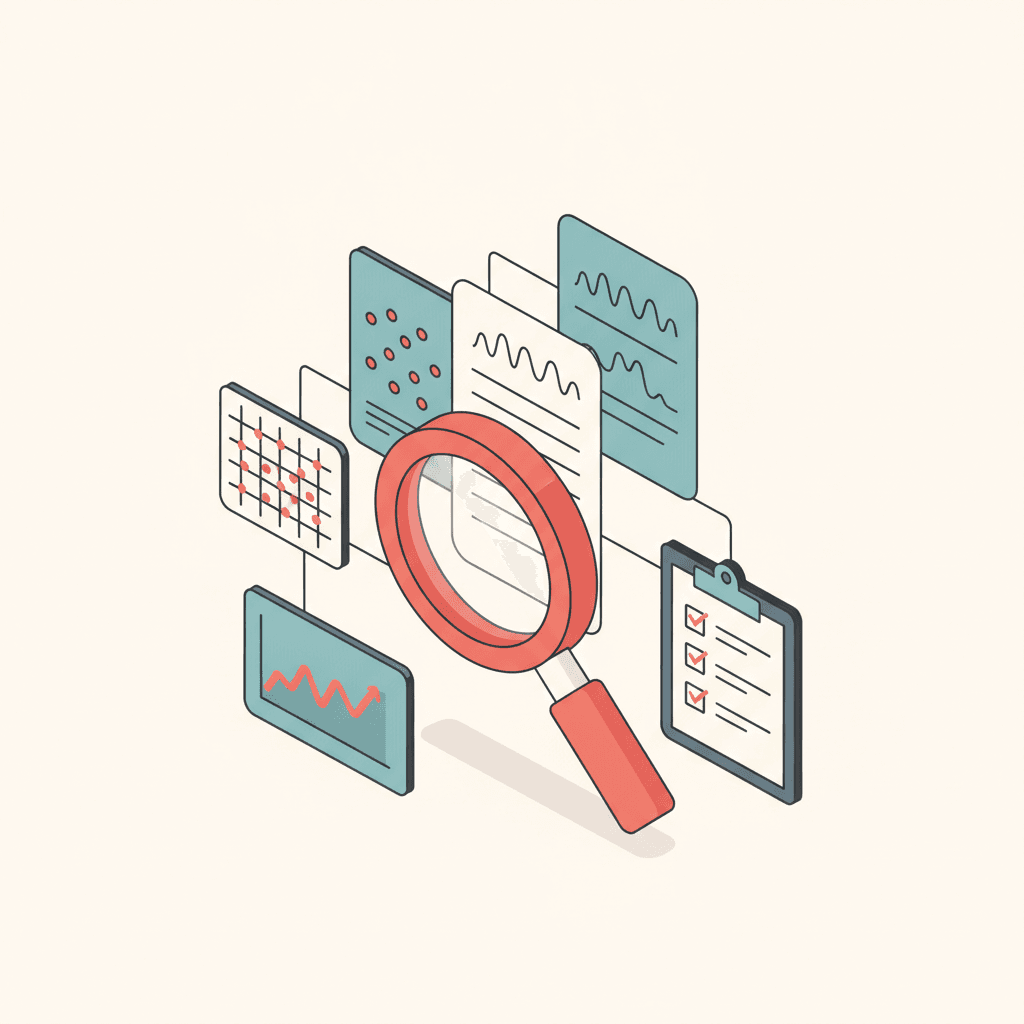
The eight data sources a BCBA draws on in a functional behavior assessment: interviews, rating scales, ABC data, scatterplots, direct measures, preference assessments, records review and functional analysis.
An FBA combines indirect information, direct observation and, when appropriate, a functional analysis to find why a behavior happens. These eight data sources feed it. The BCBA decides which are needed for each client.
1. Caregiver and teacher interviews
Structured interviews capture history, routines, triggers and what has been tried. They are indirect, so treat them as leads to test.
2. Rating scales and questionnaires
Tools such as functional assessment checklists give a quick, structured estimate of likely functions. Use them to prioritize, not to conclude.
3. ABC data
Short narrative logs from real sessions. Aim for entries across settings and times of day. See ABC data collection examples and template.
4. Scatterplots
A grid of time-of-day against whether the behavior occurred. It shows when a behavior clusters, which narrows where to look.
5. Direct measurement of the target behavior
Frequency, duration, latency or intervals — whichever matches the behavior. Establish a baseline before any intervention. See the measurement procedures cheat sheet.
6. Preference assessments
Identify items and activities that work as reinforcers. They help test access and attention hypotheses and later support the plan.
7. Records review
Previous evaluations, school plans, medical notes and past behavior plans provide context and rule out medical contributors to refer on.
8. Functional analysis (when appropriate)
A structured test of conditions to confirm function. It carries risk and requires a qualified clinician and safeguards, so it is not routine for every client.
From findings to plan
The summary links function to a behavior intervention plan with replacement behaviors and data to monitor. Read behavior intervention plan software.
In TargetFlo
FBA is a stage in the 9-stage intake pipeline. Baseline data collected in Data Collection shows up on the target's graph in its own phase, so the move from baseline to treatment is visible. The BCBA changes the phase manually, and the change is recorded with who, when and why.
- FBA data collection
- functional behavior assessment
- FBA in ABA
- functional analysis
- ABA assessment data
Véalo en TargetFlo
Saquemos la admisión del fax
Reserve una demo de 30 minutos: mapeamos su flujo de referidos al pipeline de 9 etapas, conectamos su fax y mostramos elegibilidad en admisión.
Reservar demoFAQ