
HIPAA-Aligned ABA Software on Google Cloud: What Operations Leaders Should Ask
HIPAA compliant ABA software on Google Cloud starts with BAAs, encryption, audit logs, and US data residency. Questions ops leaders should ask vendors.
HIPAA-Aligned ABA Software on Google Cloud: What Operations Leaders Should Ask
Choosing HIPAA compliant ABA software Google Cloud hosting is not about logos on a slide—it is about whether protected health information stays encrypted, attributable, and within the contractual chain your compliance officer can defend. Google Cloud offers HIPAA-eligible infrastructure; your vendor must wire that infrastructure to how BCBAs, intake coordinators, and families actually use the product.
Operations leaders rarely need to read every security white paper. They do need a structured question list before clinical documentation, parent signatures, and diagnostic reports move into a new platform.
Why ABA centers care about cloud choice
ABA operations generate sensitive artifacts early: diagnostic summaries, FBA notes, treatment plans, insurance identifiers, and signed consents. Those records often exist before the first authorized session. If the software scatters them across email, personal drives, and uncontracted tools, the center inherits breach risk and audit gaps regardless of how strong the clinic’s policies are on paper.
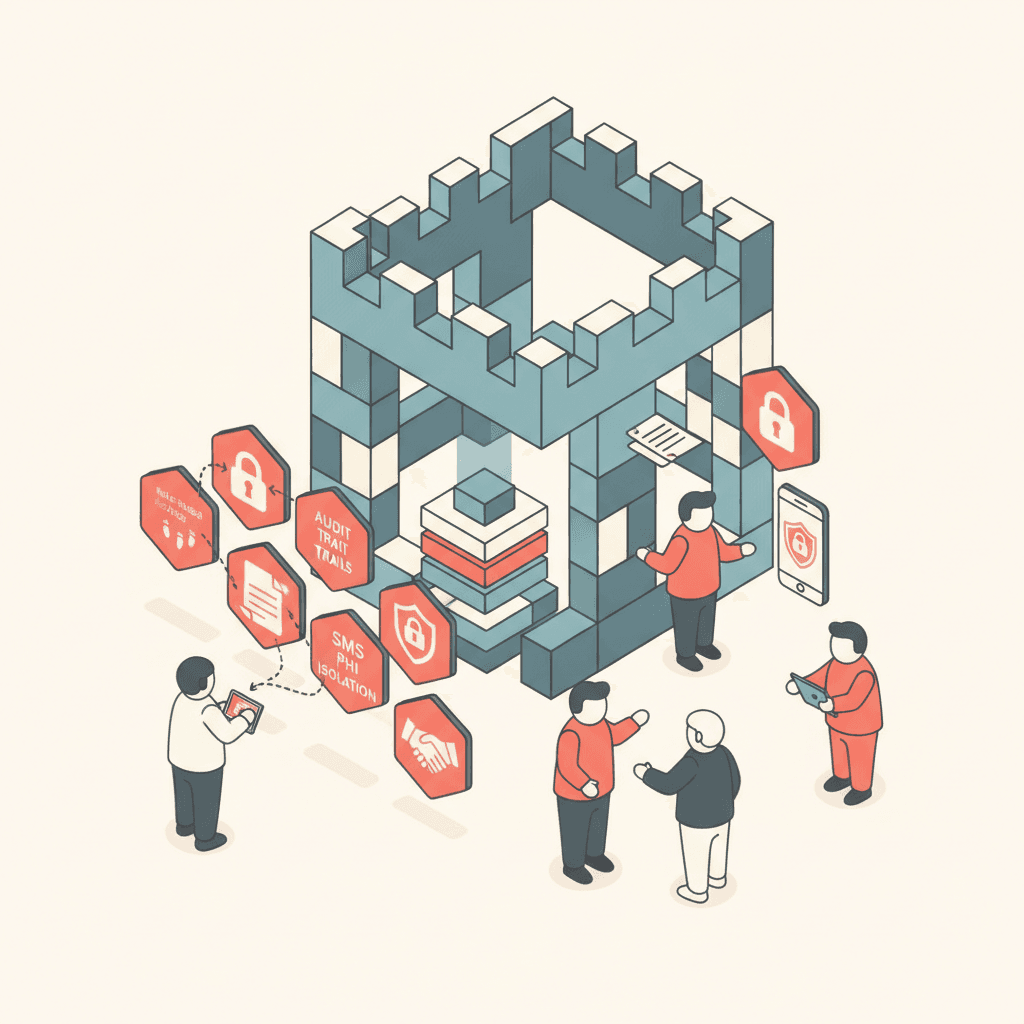
A platform designed for clinical documentation should assume PHI from day one: tenant isolation, role-based access, audit trails, and subprocessors under Business Associate Agreements. Cloud choice matters because it defines where bytes live and who can legally touch them.
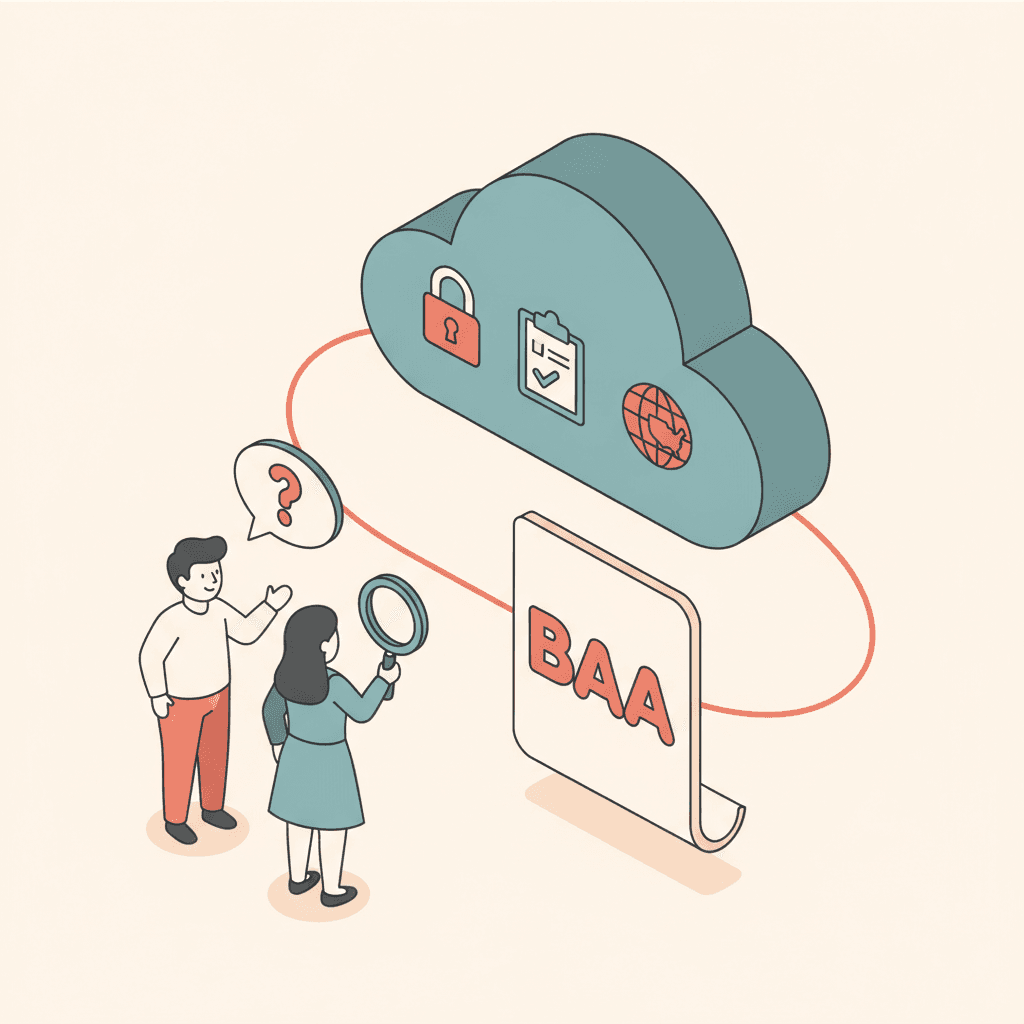
Question 1: Will you sign a BAA, and who else is in the chain?
Start here. If the vendor will not sign a BAA, stop. If they will, ask for a current list of subprocessors that create, receive, maintain, or transmit PHI on your behalf—hosting, email delivery, error monitoring, analytics if any touches identifiers, fax bridges, and identity providers.
TargetFlo is designed to operate under BAAs with customer organizations and to use HIPAA-eligible cloud services where PHI is stored. Your counsel should review the actual agreement; marketing language is not a substitute.
Question 2: Where is data stored and replicated?
Ask for primary region, backup region, and whether failover copies leave the United States. Many centers serving Medicaid and Medicare populations treat US residency as a non-negotiable policy even when vendors offer multi-region performance options.
Our Google Cloud security overview describes how TargetFlo approaches US-hosted infrastructure and encryption for clinical workloads. Validate details during procurement; documentation can lag product changes.
Question 3: How is encryption applied?
Expect encryption in transit for every browser and API session. Expect encryption at rest for databases and object storage holding documents. Ask who manages keys—cloud-managed keys versus customer-managed keys—and how key rotation works.
Encryption protects confidentiality; it does not replace access control. A staff member with excessive role permissions can still read records legally within the app, which is why minimum necessary access matters as much as ciphers.
Question 4: What does audit logging capture?
HIPAA-aligned operations need more than “login succeeded.” Useful audit logs include user identity, action, resource type, timestamp, and source IP or device context where available. Logs should be tamper-evident or stored in a separate control plane so a compromised application account cannot erase its trail.
When parents sign a Plan of Care in a portal, auditors may ask who viewed the document before signature. Your vendor should demonstrate export or query patterns your compliance team can use during an investigation—not promise “unlimited retention” without cost and policy clarity.
Question 5: How is access governed across roles?
ABA software mixes roles: BCBA, RBT, intake coordinator, billing specialist, external diagnostician, parent. Each should see only what their job requires. Ask whether permissions are coarse (all clinicians see all clients) or scoped by location, caseload, and feature.
Break-glass access for emergencies should be rare, logged, and reviewed. Standing shared accounts are a red flag.
Shared responsibility in plain language
| Layer | Typical owner | What “good” looks like |
|---|---|---|
| Physical data centers | Cloud provider | Certified facilities, redundant power |
| Network and hypervisor | Cloud provider | Patch cadence, isolation |
| Application authZ | Vendor | Role model, session timeout, MFA option |
| Clinical workflows | Vendor + center | Templates, QA, training |
| Workforce behavior | Center | Phishing awareness, device policy |
Google publishes shared responsibility guidance for its products; your vendor should map which controls they implement versus which ones your center must operationalize. See also the broader Security and Compliance page for how TargetFlo separates operational data from clinical schemas where architecture allows.
Integrations and AI features
Fax OCR, eligibility checks, and assistive drafting features introduce additional data paths. For each integration, ask whether PHI flows, whether a BAA covers the integration partner, and whether the feature can be disabled per tenant.
Assistive AI must remain clinician-in-the-loop. No vendor should auto-submit treatment plans or diagnoses without human review and signature. TargetFlo positions AI as drafting support inside controlled environments, not autonomous clinical decision-making.
Vendor diligence checklist
Use this list in RFPs and security reviews:
- Signed BAA and subprocessor exhibit
- US data residency statement for PHI
- Encryption in transit and at rest documentation
- Audit log samples and retention period
- Incident notification timeline
- Penetration test or third-party assessment summary
- Disaster recovery RPO and RTO
- Customer data deletion process at termination
Book a Demo
Walk through how TargetFlo hosts clinical workflows on Google Cloud-aligned infrastructure and how roles, logging, and parent portal access fit your compliance program. Book a Demo.
Disclaimer
Educational content only; not legal or billing advice. Work with qualified counsel and security professionals to evaluate vendors against your organizational policies and regulatory obligations.
- HIPAA
- Google Cloud
- ABA software
- BAA
- security
See it in TargetFlo
Move intake out of the fax inbox
Book a 30-minute demo and we’ll map your referral flow to the 9-stage pipeline, connect your fax provider, and show eligibility checks at intake.
Book a DemoFAQ