

How Parent Portal Plan of Care Signatures Speed Up Enrollment
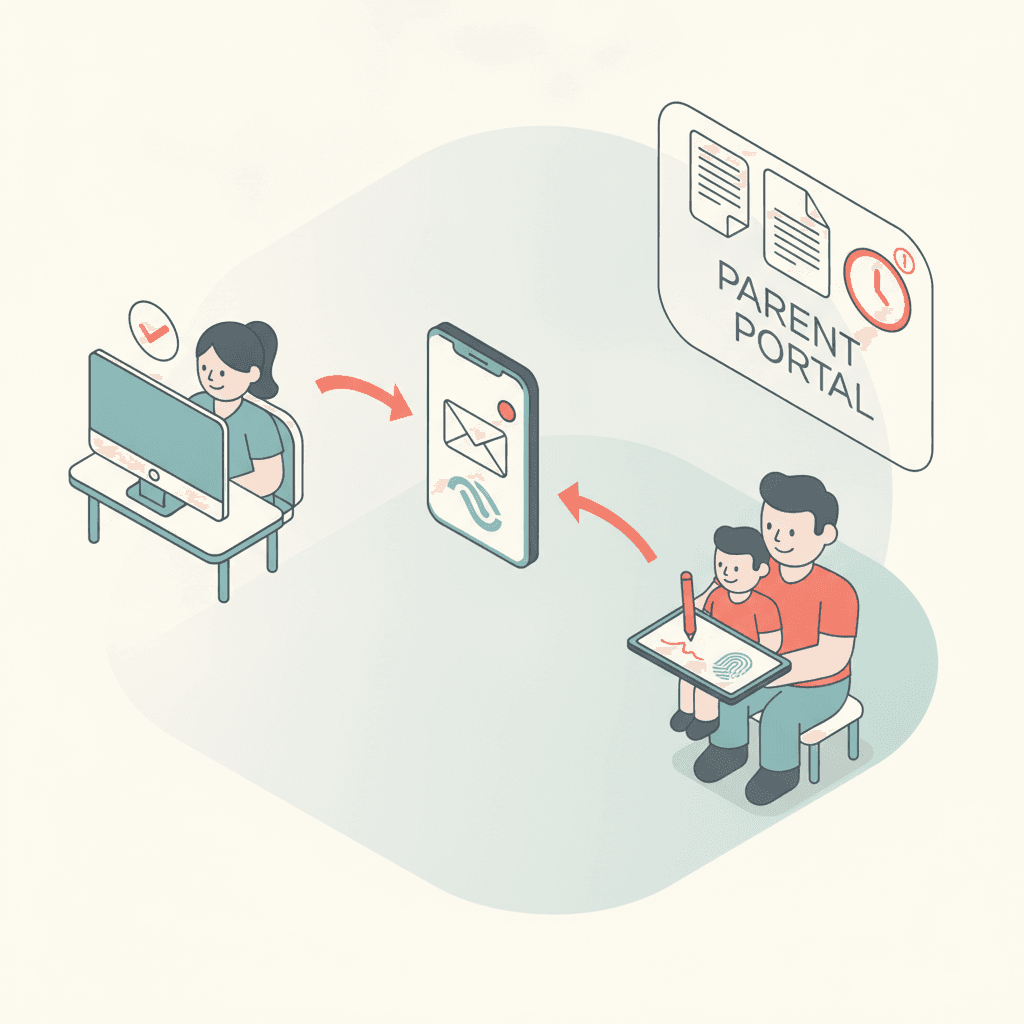
Parent portal plan of care signature workflows—clinician-first sign, non-PHI SMS notify, mobile e-sign, and audit timestamps that shorten the POC stage.
A parent portal plan of care signature closes the gap between a finished BCBA draft and a submittable authorization packet. Families want services; clinicians want accurate plans on record. The slow part is rarely disagreement—it is logistics. Printed POCs sit in backpacks, email attachments go unread, and coordinators chase photos of wet signatures.
Portal-based signing keeps the clinician-first chain intact, stores defensible timestamps, and lets intake advance the referral card the same day a parent taps sign on their phone.
What is a parent portal plan of care signature?
A parent portal plan of care signature is the guardian's authenticated e-signature on the exact Plan of Care version the licensed clinician already signed, captured inside the center's parent portal with audit fields for identity, time, and document version. It replaces informal PDF returns with a record billing and compliance can reuse for Medicaid and commercial auth attachments.
Clinician-first: non-negotiable for enrollment speed
Parent signatures before clinical finalization create rework when goals, hours, or BIP strategies change after family attestation. The fast path is:
- BCBA finalizes and signs the POC on the client record
- System locks that version
- Parent receives notification
- Parent reviews and signs the locked version
- Intake marks POC complete and moves toward authorization
TargetFlo exposes staff visibility of clinician and parent signature times so coordinators stop guessing whether the plan is ready—see parent Plan of Care signatures for the full chain.
Non-PHI notification that still drives action
SMS and email nudges work when they are safe and clear. Messages should state that a document awaits review in the portal with a link—not the child's diagnosis, behavior targets, or Medicaid ID. PHI guards on broadcast and notification tools prevent accidental clinical detail in texts.
Parents open portal links on phones when attachments feel like homework. Pair notifications with a single owner on the intake card who calls only when the portal shows an unsigned POC after forty-eight hours.
What parents see versus what staff see
Guardians should see the treatment plan language you want them to understand—recommended hours, goals in plain terms, caregiver responsibilities—not internal coordinator notes or billing comments. Staff views retain full audit history, signature timestamps, and checklist status on the referral card. Keeping those layers separate prevents accidental exposure of operational jargon in the family-facing PDF.
If your center publishes parent-friendly goal summaries, generate them from the same locked version the clinician signed so families never sign a simplified summary that disagrees with the payer upload.
Phone-friendly review and e-sign
Mobile layout matters. Parents scroll skill goal tables and caregiver commitments on small screens; signature controls should not require printing. Optional section acknowledgments—recommended hours, training participation—reduce "I did not see that page" disputes later.
The TargetFlo Parent Portal supports consent and document signing alongside POC so one login clears multiple diagnostics-era forms when your policy allows.
Timestamps, version history, and revised POCs
Enrollment stalls when coordinators cannot prove which plan was signed on which date. Store:
- Signer account tied to the guardian record from intake
- UTC or local timestamp per your policy
- Immutable PDF or rendered document hash tied to version ID
When payers request revised hours or a reauth forces goal changes, issue a new version and a new parent signature request. Prior signed versions remain on the record for auditors asking what was in effect on a given date of service.
Link revised plans to Plan of Care software practices so BCBAs do not edit signed PDFs offline.
Pipeline integration: POC stage to pending authorization
Signature events should flip checklist items on the referral card automatically—clinician signed, parent signed—so pending authorization work starts without a coordinator Slack message. Compare dwell time before and after portal rollout; most centers see POC stage compression before auth submission, not after.
Authorization still depends on payer timelines; portal signing does not guarantee Medicaid approval.
Security and guardian account hygiene
Guardian accounts created at intake should use verified contact methods. Role separation prevents staff accounts from signing as parents. Audit logs should capture view and sign events for compliance reviews—summarized on Security and Compliance.
Rollout tips for center leaders
- Train BCBAs to finalize in-system, not email PDFs "for convenience"
- Script front-desk language: "You will get a text with a portal link—no clinical details in the text"
- Measure median hours from clinician sign to parent sign weekly for thirty days
- Pair portal signing with intake stage ownership so one coordinator chases exceptions
When paper still appears
Some guardians lack reliable internet or prefer print. Centers can support exceptions without abandoning portal-first policy: print from the locked version, scan, and upload—with metadata noting offline signing. Keep exceptions rare or timestamps and version control erode.
Metrics that prove portal ROI
Track median hours from clinician sign to parent sign, percent signed within seventy-two hours, and POC stage average dwell time before and after portal rollout. Share dashboards with clinical directors monthly so BCBAs see how finalization speed affects families waiting for authorization—not only intake coordinators.
Pair portal metrics with authorization submission dates. Faster parent signatures do not help if auth packets still sit in queue because progress notes are missing; the signature is one gate in a longer enrollment path.
Coordinating with bilingual families
Offer portal UI and support in the languages your census requires. Non-PHI SMS can still direct guardians to the correct localized login when your platform supports it. Phone interpretation for questions about plan content is clinical communication—schedule those calls rather than stuffing explanatory detail into SMS bodies.
Book a demo
See clinician sign, non-PHI SMS notification, parent mobile e-sign, and pipeline advancement on a test referral. Book a Demo with intake and clinical leads in the same session.
Educational content only; not legal or billing advice. Confirm e-signature acceptance with your payers and counsel.
- parent portal plan of care signature
- ABA parent portal
- Plan of Care signing
- POC enrollment
See it in TargetFlo
Move intake out of the fax inbox
Book a 30-minute demo and we’ll map your referral flow to the 9-stage pipeline, connect your fax provider, and show eligibility checks at intake.
Book a DemoFAQ